

The House
Home to the stunning Mortlake tapestries, woven from the internationally famous Raphael cartoons, now housed in the V&A, the Abbey has a rich and varied history spanning 900 years. Through the centuries, it has played host to Cistercian monks at prayer, 19th-century philosophers and politicians, by misfortune implicated in the Monmouth Rebellion and more recently, the backdrop to the Hollywood adaptation of Thomas Hardy’s ‘Far From the Madding Crowd,’ starring Carey Mulligan, Michael Sheen and Tom Sturridge.
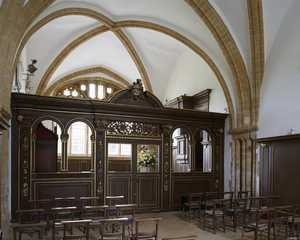
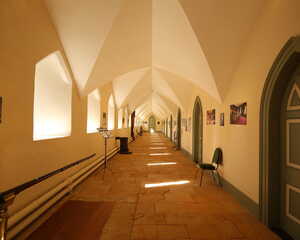
If any of Forde Abbey’s 12th-century Cistercian monks were to return today they might well recognise their quarters, their kitchen and refectories, and their chapter house. It is rare to see so much of a medieval monastery preserved as an integral part of a private dwelling.
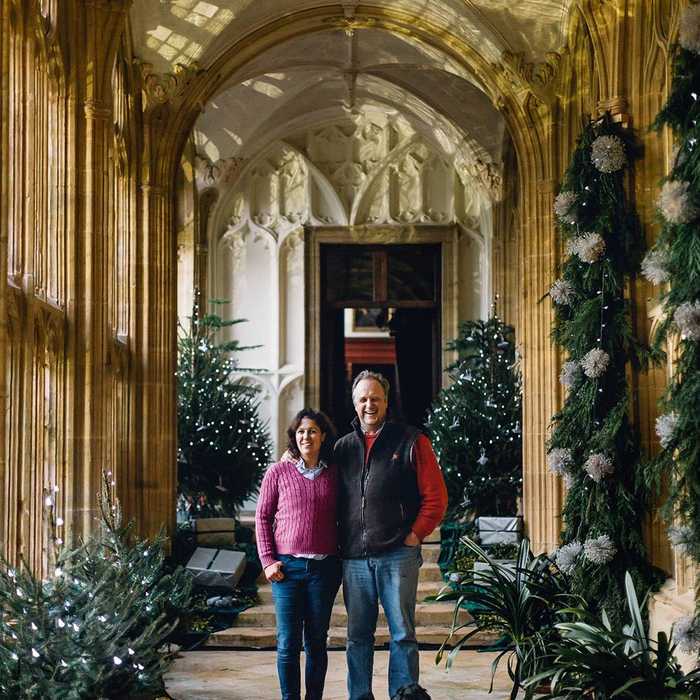
Responsibility for this wonderful home was inherited by the Kennard family in 2009. They continue to live here, farming as the Cistercians did over five hundred years before them.

Foundation
Founded in the twelfth century, Forde Abbey flourished as a monastery for four hundred years, during which time it became one of the richest and most learned institutions of its kind in England. The last Abbot, Thomas Chard, was perhaps the greatest and is certainly the best remembered. He succeeded in 1521, and applied his substantial fund of learning, energy and imagination to a comprehensive overhaul and reconstruction of the fabric of the Abbey.
The Dissolution
Abbot Chard’s masterplan was interrupted in 1539 by the dissolution of the larger monasteries. Chard decided that discretion was the better part of valour and handed Forde Abbey quietly over to the Crown, becoming vicar of Thorncombe until his death in 1543. In the same year the Abbey and its lands was leased by the Crown to Richard Pollard for the sum of £49. 6s. 6d.
THE PRIDEAUX LEGACY
For the next 100 years Forde Abbey was owned by a succession of absentee landlords with the building plundered for its stone. However, in 1649 it was purchased by Edmund Prideaux, Member of Parliament for Lyme Regis, fervent supporter of the parliamentary cause and later, Oliver Cromwell’s Attorney General. He was largely responsible for transforming Forde Abbey from a Monastic residence to a private home.
Prideaux died in 1659 and was succeeded by his son, also Edmund. Despite being considered an intelligent man he made the disastrous mistake of entertaining the Duke of Monmouth one night in 1680. Five years later, after the Battle of Sedgemoor in which James II’s army defeated Monmouth’s Protestant rebels, Prideaux was suspected of having supported the invasion. On the slender pretext of Monmouth’s earlier visit to Forde, he was arrested and imprisoned in the Tower of London on a charge of high treason. The notorious Judge Jefferies demanded a sum of £15,000 to save him from the gallows.
Edmund was ultimately pardoned and lived quietly at Forde until his death in 1702 when the estate was inherited by his daughter Margaret and her husband Francis Gwyn, later Secretary of War to Queen Anne. They and their descendants inhabited the Abbey throughout the 18th-century making few changes to the house. To their eternal credit, however, they created the gardens.
THE 19th-CENTURY
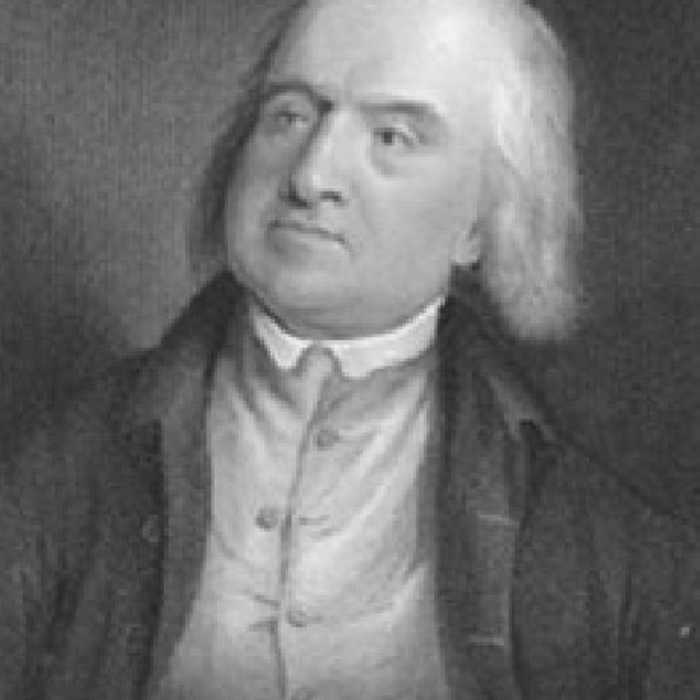
A lack of money meant that John Fraunceis, last of the Gwyns, was unable to continue living in the Abbey. In 1815 he moved abroad and rented the Abbey to the radical philosopher, Jeremy Bentham. Bentham entertained a number of famous guests here, among them a young John Stuart Mill with his father James Mill, the economist David Ricardo, and the regal reformer Sir Samuel Romilly. For a short time Forde Abbey played host to some of the greatest thinkers of the early 19th-century.
VICTORIAN FORDE ABBEY
John Fraunceis Gwen died without heirs in 1846 resulting in a massive sale of the Abbey’s contents. The house and lands were sold to a merchant called Miles, who apparently occupied just five rooms and allowed the rest to fall into disrepair. Forde was again sold in 1863, to Mrs Bertram Evans, and so began another period of investment. Mrs Evans died in 1894, leaving the Abbey to her son William Herbert who, in turn, left it to his cousin Elizabeth, who was married to Freeman Roper. The Ropers moved into the Abbey in 1905.
Modern Times
In 1943 Elizabeth Roper died and the house passed into the care of her second son, Geoffrey and his wife Diana. Geoffrey devoted his whole life to the Abbey and its gardens, living there for almost eighty years. He added the arboretum and planted many of the woods that are a feature of the estate. In the 1970s Geoffrey’s son Mark and his wife Lisa took on the responsibility, modernising the house, developing a fruit farm on the estate, establishing the acclaimed herd of Forde Abbey Devon Cattle and turning Forde Abbey into a successful tourist attraction.
In 2009, another generation became stewards of this beautiful place with Mark and Lisa’s eldest daughter Alice, her husband Julian and their three children taking their turn to maintain this beautiful building and the surrounding garden and farmland.
Film Location
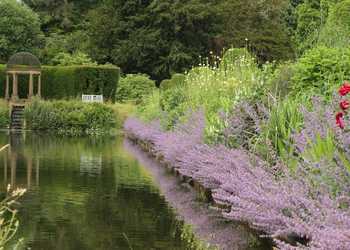
The stunning house, which over the centuries has been sympathetically converted from its monastic origins in 1141 to its present day use as a family home, and the beautifully maintained gardens, make Forde Abbey an ideal location for filming.
The Mortlake Tapestries
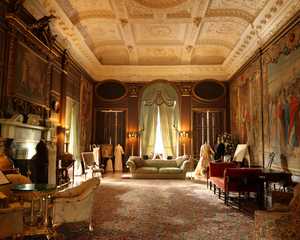
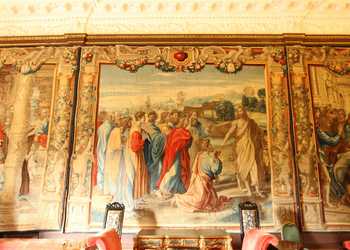
The Mortlake Tapestries on the walls in The Saloon are the most important works of art in the Abbey. They are woven from the cartoons painted by Raphael, that are now on display in the Victoria and Albert Museum and depict the scenes from the lives of St Peter and St Paul, as described in St John’s Gospel and Acts of the Aspostles.
 Updating page...