

The forde abbey story
Nine hundred years of history
1133
Founded at Brightley, Devon
1141–48
Building begins beside the River Axe
1191–1214
John of Ford, prior then abbot
14th c.
More than 30,000 acres of land
c.1520
Abbot Chard renovates the Cloisters
1539
Surrendered to the Crown
c.1580
Held by the Rosewell family
1649
Edmund Prideaux buys the abbey
Cistercian monks first founded an abbey in 1133, at Brightley, in Devon. When the land proved too poor to farm, they started to head back to the mother monastery in Surrey, but were donated land beside the River Axe by Adelicia de Brionis (the late Abbot’s sister), where they started building their new monastery between 1141 and 1148. Under successive abbots, the community grew wealthy, holding more than 30,000 acres of land by the fourteenth century. John of Ford served as prior and then abbot between 1191 and 1214, and one of the abbey's other abbots, Baldwin, went on to become Archbishop of Canterbury.
The last of the abbey's builders was Abbot Chard, who renovated the Cloisters around 1520 and left his initials carved into the stonework there. In 1539, as part of the dissolution of the monasteries, Chard surrendered the abbey to the Crown.
Over the following century, it changed hands several times, leased first to Richard Pollard, then to Sir Amias Poulet, then held by the Rosewell family from around 1580.
In 1649, Edmund Prideaux bought the abbey and converted the monastic buildings into a private house. He added the State Rooms above the Cloisters, positioned to balance the Great Hall across Chard's Tower, along with the ornate plaster ceilings that survive today and the Mortlake tapestries he commissioned for the Saloon.
The custodians
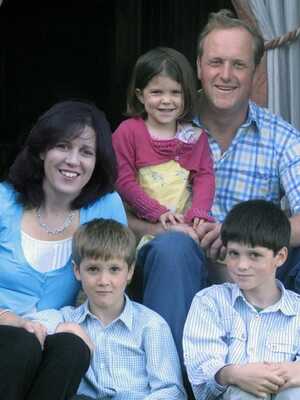
The family behind Forde Abbey
The house was passed down by inheritance and marriage after 1649, reaching Freeman Roper's wife, a cousin of the previous owner, who inherited it in 1905. The Roper family still own and runs Forde Abbey today. With much of the gardens being expanded and improved by them.
Geoffrey Roper planted more than 350,000 trees on the estate over his lifetime, work that shaped the Arboretum and much of the wooded areas visitors walk through today. His family also established the Bog Garden and the Rock Garden, two of the more distinctive areas of the gardens.
Forde Abbey has been in the care of the Kennard family (Mark Roper’s daughter) since 2009 and remains a family home today, open to visitors for most of the year.
“
“For more than nine centuries, Forde Abbey has been shaped by the hands and hearts of those who have cared for it. Today, we are privileged to continue that stewardship, preserving its beauty, sharing its history and welcoming visitors to experience a place that remains vibrant, inspiring and deeply connected to its community.”
– The family at Forde Abbey
Film & Television
On Screen
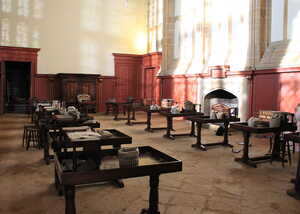
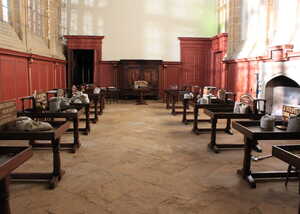
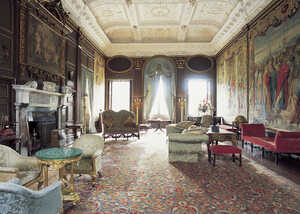
The Great Hall stood in for a Victorian corn exchange in the 2015 film adaptation of Far from the Madding Crowd, starring Carey Mulligan and Michael Sheen, shot over three days with close to a hundred extras. Forde Abbey has also featured in Restoration, with Robert Downey Jr., Meg Ryan, and Hugh Grant; the BBC's 2002 adaptation of Daniel Deronda; and several German television films based on Rosamunde Pilcher's novels.
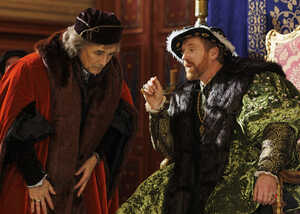
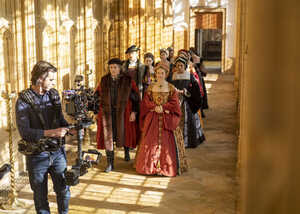
Most recently, the house featured heavily in the second series of the BBC adaptation of Wolf Hall by Hilary Mantel, and welcomed Damian Lewis, Mark Rylance and Thomas Brodie-Sangster onto the site.
The Great Hall – as seen in Far from the Madding Crowd, 2015
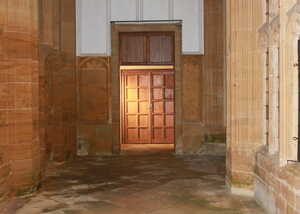
As featured in Wolf Hall series two, BBC
Thirty acres
The Gardens
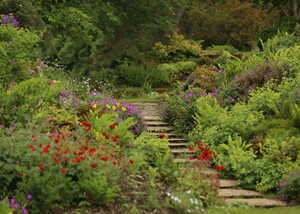
Thirty acres of garden surround the house. The earliest gardens were laid out by Sir Francis Gwyn in the early 18th century. His parterres were among the earliest ever introduced between 1705 and 1720, but can only be seen now during dry summer months.
Much of the garden you see today has been developed by the Roper family throughout the twentieth century and is Grade II* listed on the National Heritage List for England.
The Rock Garden was created in 1923 from stone left over from the marl excavations that had once supplied building material for the abbey itself, and it is still planted with alpines and spring bulbs today.
The Bog Garden and the Arboretum, largely Geoffrey Roper's work, sit alongside the Park Garden's herbaceous borders and the colour of the Long Border, at its best throughout the summer. From The Mount, the highest point in the gardens, you can look back across the ponds towards the house and the 160-foot Centenary Fountain.
Snowdrops and hellebores open the year, followed by drifts of spring bulbs, tulips, flowering shrubs, and many herbaceous borders which continue the colour throughout the gardens right up to the first frosts in the autumn.
Recognition
Awards and affiliations


-
Grade I listed building (house)
-
Grade II* listed garden, National Heritage List for England
-
RHS Partner Garden
-
Member, Historic Houses
-
Member, Visit England
-
Member, Great British Gardens
-
Member, Dorset Garden Trail
-
Shortlisted, Historic Houses Garden of the Year award, 2019
Plan your visit
Planning a visit? Between March and October, the gardens are open daily from 10:30am to 5pm, and the house is open Tuesday to Friday and Sunday, plus bank holiday Mondays, from midday to 3:30pm.
 Updating page...